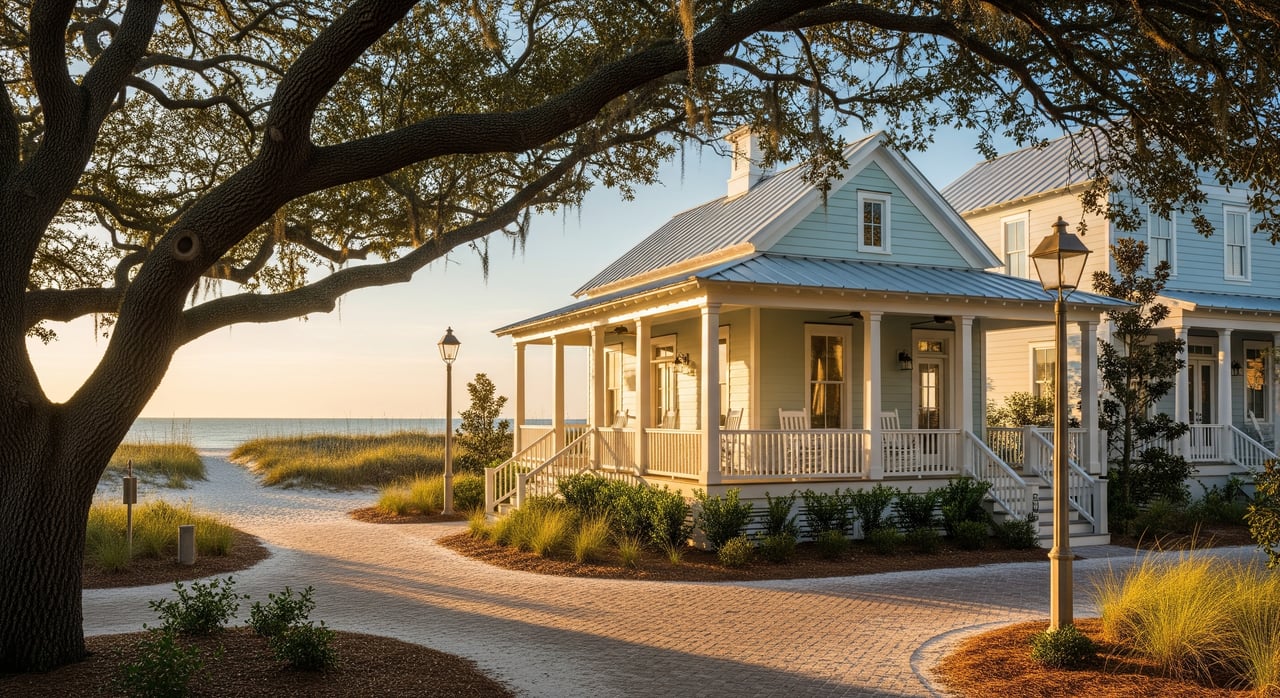
Ever wonder why Seaside feels different the moment you arrive? The streets are narrow, porches face the sidewalk, and a quick stroll puts you at the square for coffee or sunset events. If you’re comparing 30A communities, understanding the New Urbanist ideas behind Seaside helps you decide if this lifestyle, and its ownership details, fits your goals. In this guide, you’ll learn how Seaside’s design works, what it means for daily life and resale, and how it compares to neighboring towns on 30A. Let’s dive in.
New Urbanism is a planning approach focused on walkable, mixed‑use neighborhoods built at a human scale. In plain terms, it means shorter blocks, more porches and sidewalks, and a town center you can actually use. Homes, shops, and civic spaces sit close together, so many daily needs are a short walk away. The result is a stronger public realm, less dependence on cars, and a neighborhood that feels like a place, not just a subdivision.
Core ideas include walkability, a connected street network, a variety of housing types, and design standards that focus on how buildings meet the street. You’ll also see fewer expansive parking lots, more shade and seating, and a focus on form and frontage. Seaside is often cited as an early, influential example of these principles in action.
Seaside is laid out in a compact grid with short blocks and narrow streets. This makes walking easy and creates many route choices. Sidewalks, mid‑block connections, and homes that face the street with welcoming porches encourage casual encounters and a neighborly feel. Most residences are a short walk to the town center.
At the heart of Seaside is a central square with shops, dining, and civic spaces clustered together. Ground‑floor retail with nearby housing or offices is common, which keeps daily errands and social time close at hand. You can walk to coffee in the morning, grab lunch near the amphitheater, and be back on your porch to catch the breeze by late afternoon.
Seaside follows strong architectural guidelines and an active review process. The result is a cohesive coastal vernacular with porch‑forward facades, controlled building scales, and consistent roof forms and materials. Design controls protect the public face of the neighborhood and help maintain the character that draws people to Seaside in the first place.
Plazas, the amphitheater, playgrounds, and civic edges frame daily life. Streetscapes with trees, benches, and lighting make walking comfortable throughout the day. These public spaces host events and casual gatherings, reinforcing a shared community identity that is hard to replicate.
Curb cuts are limited and surface parking is minimized near key public spaces to keep the focus on people, not cars. Service and emergency vehicles are accommodated, but pedestrian continuity is the priority. For you, this means a more pleasant walking experience and a town center that feels like a destination rather than a drive‑through.
Covenants, an Architectural Review Board, and neighborhood rules provide clear expectations for owners. In a 30A corridor where short‑term rentals are part of the reality, these controls work alongside rental regulations. The goal is to balance an active tourism market with the character and comfort residents expect.
Short, walkable trips are the norm. Coffee, breakfast, parks, shopping, and community events are within an easy stroll for many homes. That reduces routine car trips and makes it easier to enjoy spontaneous moments, from an ice cream run to an evening concert on the square.
Porches face sidewalks, people walk more, and public spaces invite lingering. You see neighbors more often and connect in smaller, unplanned ways. For many owners, this is the defining quality of Seaside living.
On 30A, the tempo shifts with the seasons. Peak months bring higher pedestrian volumes and busier parking around the square, which supports local businesses and energizes the public realm. Off‑season, you’ll feel a calmer pace while the walkable design still works day to day.
The same controls that keep Seaside beautiful also shape your maintenance approach. Expect approvals for exterior changes and adherence to specific materials or paint palettes. While this can add steps or costs, it also protects the look and feel of the neighborhood over time.
HOA or community fees typically fund maintenance of public spaces, landscaping, and shared amenities. Clarify what your fees cover and whether reserves or planned assessments are in place. These services sustain the quality of the streetscapes and parks that define Seaside’s appeal.
Walkable, design‑cohesive neighborhoods often enjoy a strong demand profile. Studies widely report a positive relationship between walkability and home values, and Seaside’s national recognition within New Urbanism can amplify buyer interest. While compact lots and distinctive house types may narrow the audience in some price bands, brand strength and lifestyle fit often offset that with motivated demand.
Short‑term rental demand along 30A is significant, but rules vary and seasonality matters. Before underwriting returns, confirm HOA and county rental regulations, understand operational constraints, and account for coastal insurance and storm risk. A well‑located, walkable property can perform strongly when aligned with neighborhood rules and market cycles.
Like Seaside, Rosemary Beach follows New Urbanist principles with a compact center and strong design standards. Its architecture leans more European with brick accents and denser form in some areas. Market positioning and pricing can differ, so compare specific blocks and proximity to the town center.
Alys Beach is highly curated, with strict design codes and a striking white‑stucco, modern Mediterranean aesthetic. Construction standards and price points are often higher. The public realm is refined and sculpted, offering a distinct lifestyle and architectural expression compared to Seaside’s cottage character.
Both are planned communities with trails, parks, and pedestrian amenities. WaterColor emphasizes natural landscapes and, in some sections, larger lots than you’ll typically find in Seaside. Each neighborhood has its own covenants and rental rule sets, so review specifics for any property you are considering.
Older beach towns grew more organically, with a wider mix of building types and less formal design control. If you prefer greater variety and looser rules, these areas may fit your style. If you want predictable streetscapes and a formal town center, Seaside’s model is a better match.
Use this quick list to guide your review of a Seaside property or a similar 30A opportunity:
Choose Seaside if you value a walkable, porch‑centric lifestyle with a clear town center and a high standard for design. Expect a stronger framework of rules and approvals in exchange for the neighborhood’s consistent look and feel. If you are an investor, pair location and design with a detailed review of rental rules and seasonality. If you are a seller, highlight walkability, proximity to the square, and architectural pedigree to meet buyers who are specifically seeking this kind of community.
When you are ready to compare options or position a property for the market, partner with a team that knows the nuances of Seaside and the entire 30A corridor. The right guidance can help you lean into what the New Urbanist lifestyle means for value, marketing, and long‑term ownership.
Ready to take the next step in Seaside or anywhere on 30A? Connect with the trusted local advisors at Spears Group for neighborhood‑level guidance, valuation insight, and a white‑glove plan tailored to your goals.
Office 2048 West County Hwy 30A #107 Santa Rosa Beach FL 32459
Office 2048 West County Hwy 30A #107 Santa Rosa Beach FL 32459